The Architecture of Death: Sites of Remembrance
The Architecture of Death: Sites of Remembrance is a long-term public research and design project that asks how architecture can help communities face death, grief, memory, and ecological change with greater care. At a time when many people are disconnected from traditional burial practices, ancestral places, and shared rituals of mourning, the project proposes new ways to make remembrance visible, meaningful, and accessible in public life.
Emerging from Rachel Paupeck’s engagement with meditation, embodied awareness, and Buddhist practices of compassion, the work considers death not as something to be hidden or privatized, but as a universal human experience that can be held collectively through space, material, landscape, and ritual. It brings together architecture, sculpture, environmental thinking, memorial practice, and public art to ask how spaces of mourning might also become spaces of connection, reflection, ecological care, and renewal.
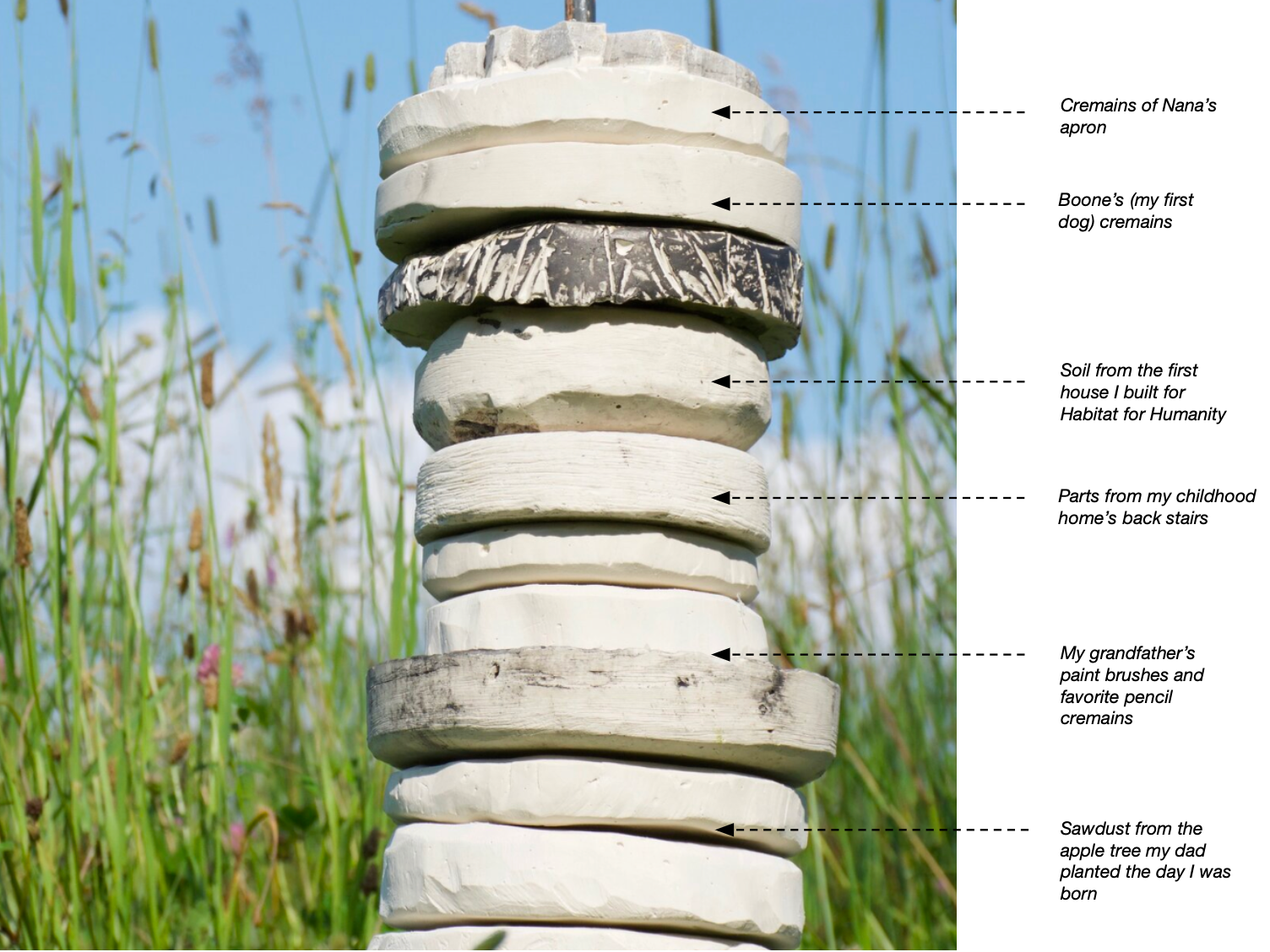
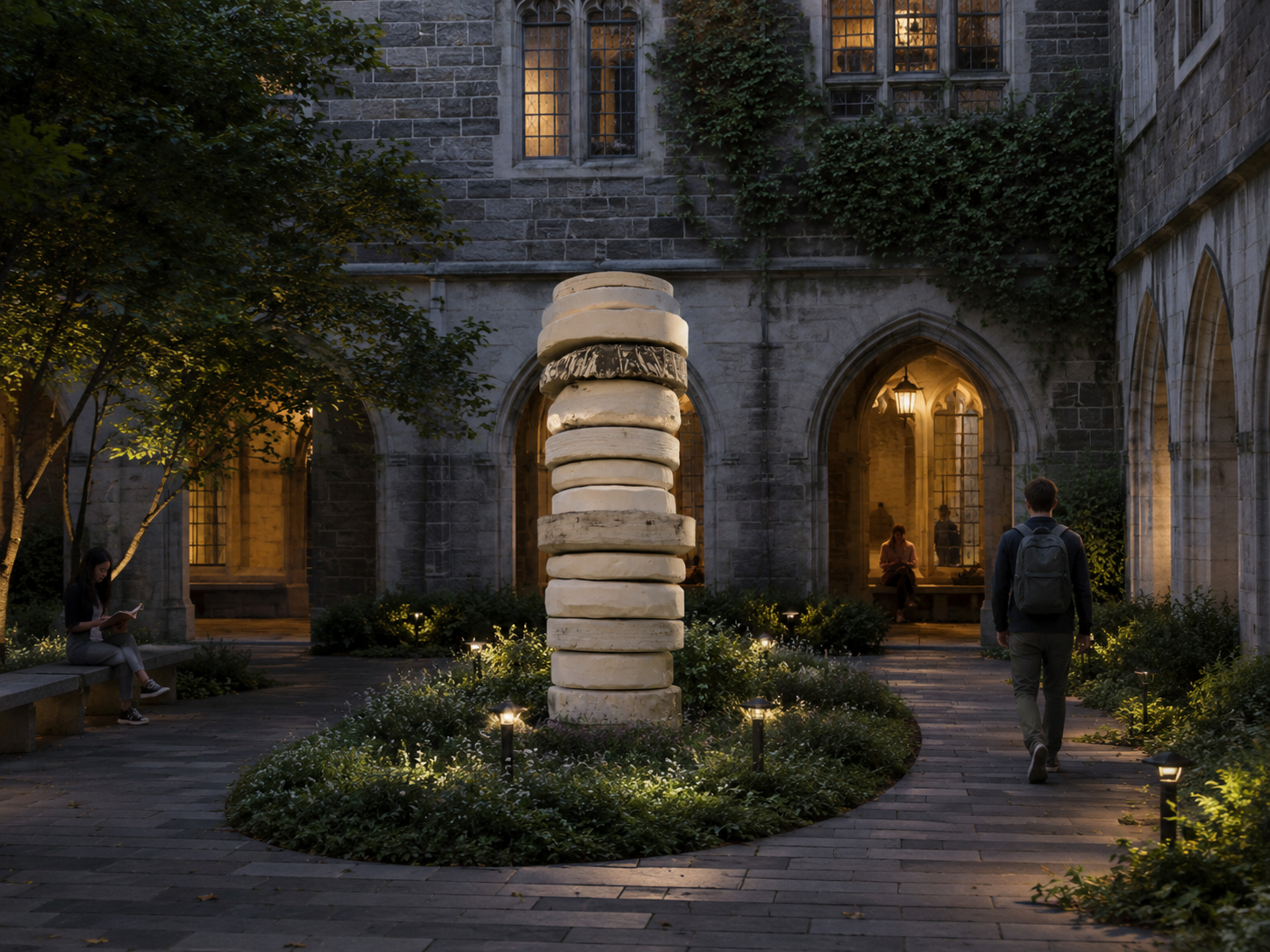
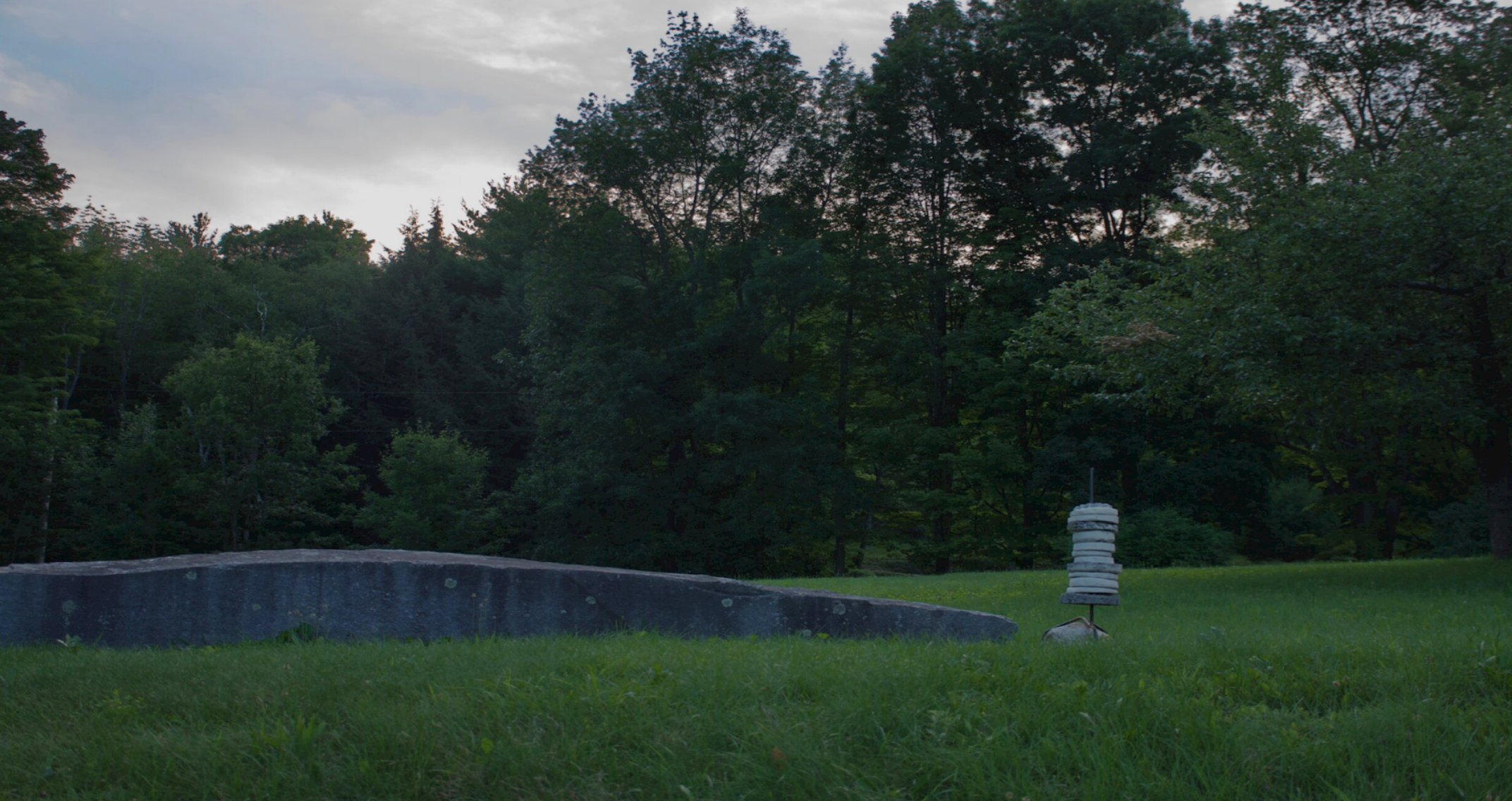
The research began with studies of Grove Street Cemetery in New Haven, where documentation of historic headstones evolved into a broader investigation of inscription, light, absence, and memorial presence. These studies led to Birch Grove, a burial proposal composed of individual memorial disks threaded onto central poles to form vertical totems of remembrance. Each disk contains the cremated remains of one person mixed into concrete and stone and is marked with their name. Approximately one inch thick and five inches in diameter, the disks accumulate over time, creating memorial structures that are simultaneously intimate and collective.
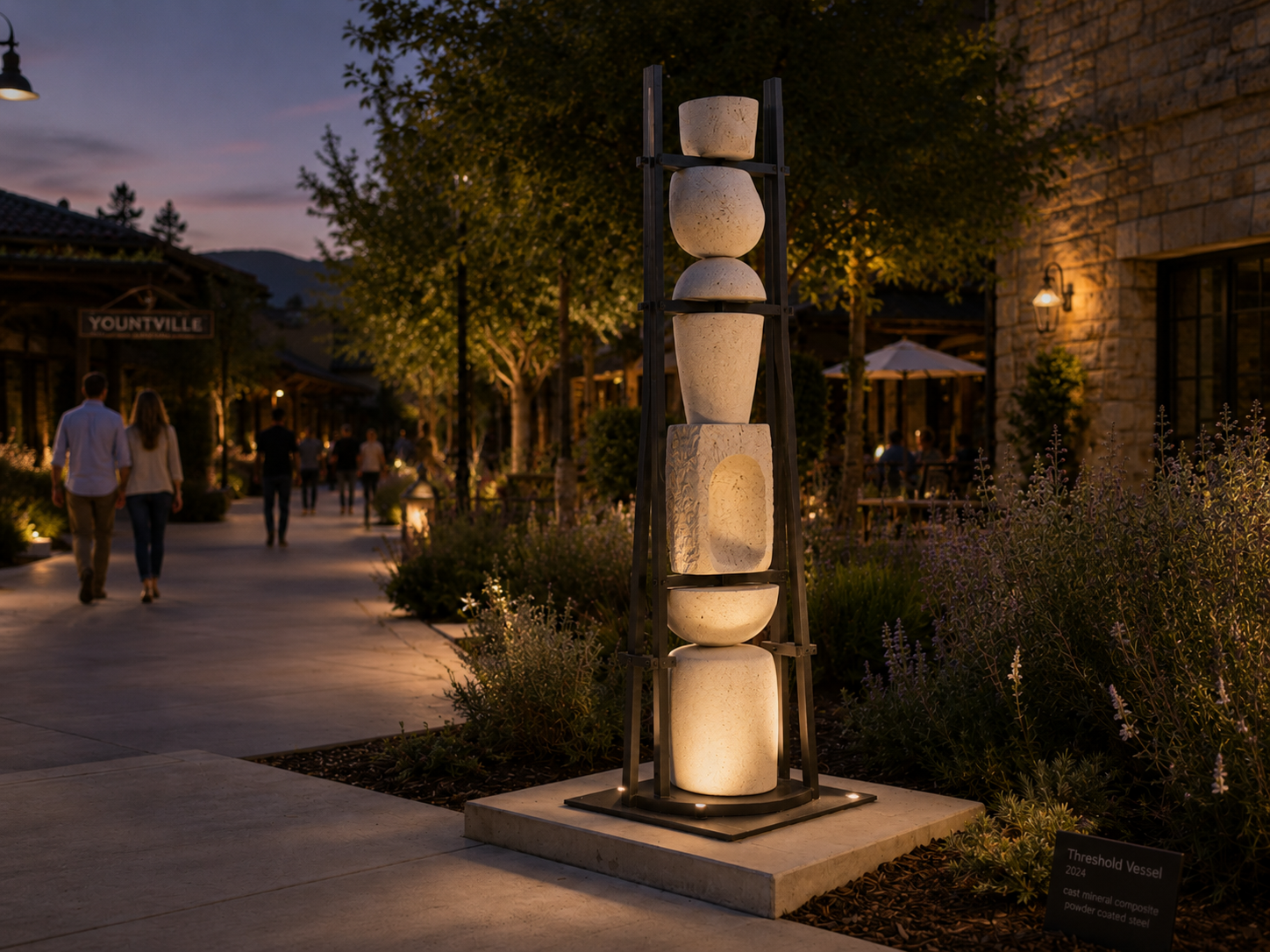
Rather than proposing a single fixed monument, Birch Grove is conceived as an adaptable memorial system that can respond to different communities, landscapes, and sites. The totems can form paths, groves, clusters, thresholds, or smaller places of pause. Visitors move toward them, among them, and through the spaces between them, encountering memory through proximity, repetition, silence, and movement. Negative spaces designed into the totems create small habitats for birds and other forms of life, allowing the memorials to support ecological presence as well as human remembrance. In this way, the project asks how death and life might coexist within the same spatial and material system.
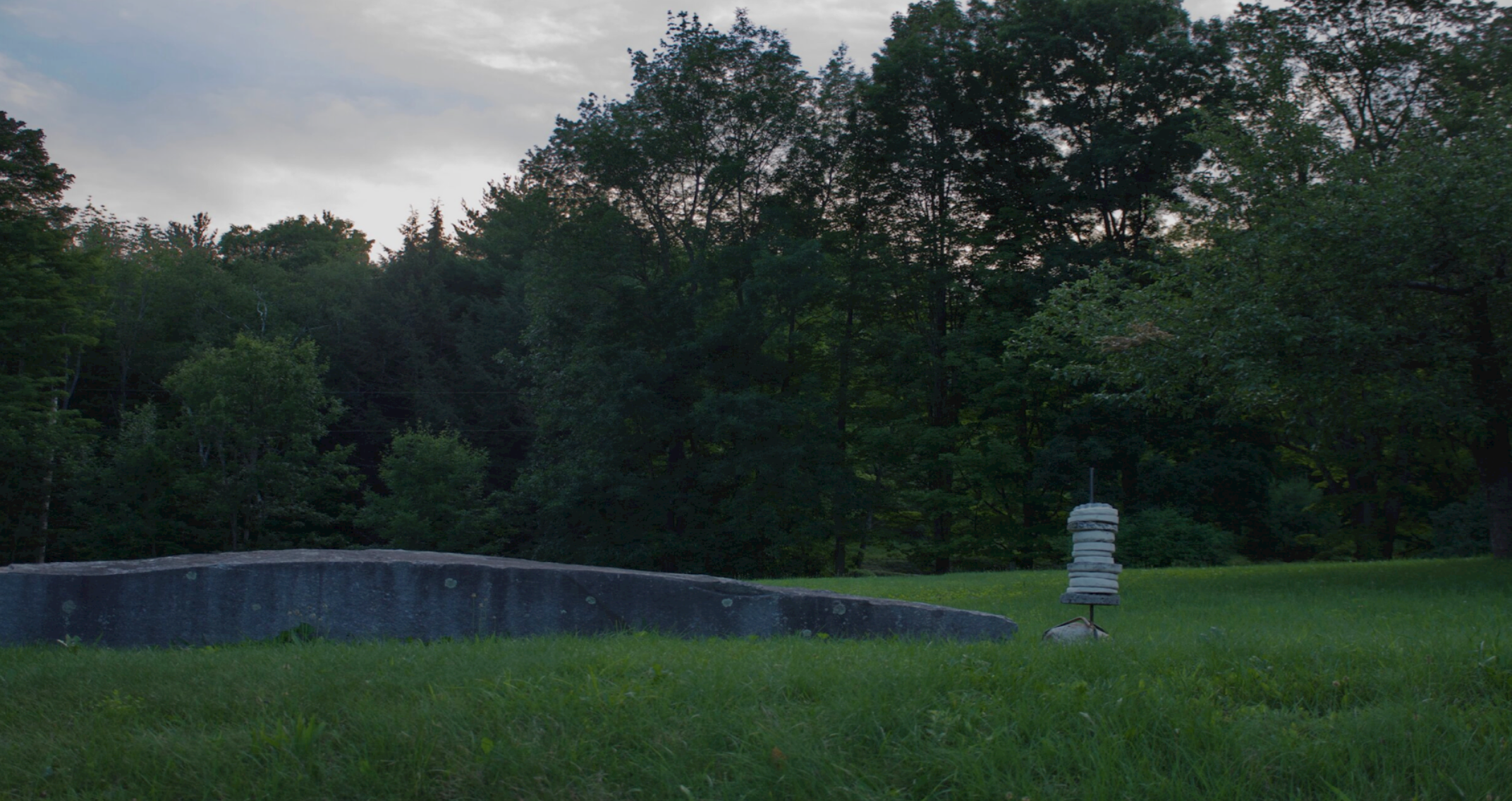
The project’s most recent iteration, The Nomadic Burial Project, responds to the mobility of contemporary life. As families move across cities, regions, and countries, many people no longer live near ancestral burial sites or permanent places of remembrance. This portable stone-and-disk sculpture asks how grief, memory, and ritual might travel with the living, allowing remembrance to remain active across distance, relocation, and change.
Across its iterations, The Architecture of Death: Sites of Remembrance offers a new framework for public memorial practice: one that is sustainable, adaptable, participatory, and emotionally resonant. The project positions architecture as a public medium through which loss can be witnessed, memory can be shared, and communities can develop more compassionate relationships to mortality, landscape, and one another.